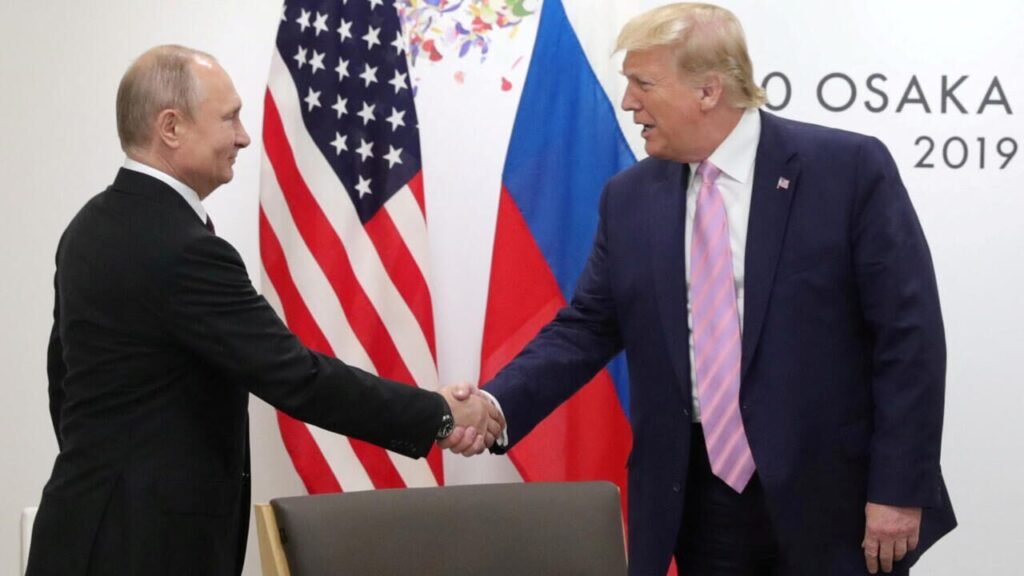
The Complex Dynamics of the Trump-Putin Relationship: Why a Political Alignment Faltered
From the outset of Donald Trump's presidency, the relationship between him and Russian leader Vladimir Putin was a topic of intense fascination and speculation. Often described as an "alliance" by critics and a strategic friendship by supporters, the public warmth between the two leaders was in sharp contrast to the traditional animosity between the United States and Russia. However, instead of solidifying, that relationship has unraveled—not due to a sudden personal feud, but because of the harsh reality of geopolitical interests.
The rapid deterioration of this alignment was not a quick "breakup," but the inevitable result of forces far greater than any personal connection.
The Foundation of the "Alliance": A Confluence of Interests, Not a Strategic Pact
The perception that Trump and Putin were "good allies" originated in a confluence of political interests rather than a formal strategic pact.
- For Trump, the relationship with Putin was a way to challenge the foreign policy status quo in Washington. He saw Putin as a strong leader who prioritized his nation and believed that cooperation with Russia could be useful in areas like the fight against terrorism and in countering China's growing influence.
- For Putin, the arrival of an American president willing to question institutions like NATO and the European Union was an unprecedented opportunity to sow division among his adversaries and restore Russia's prestige on the global stage.
Both leaders used the relationship for their own domestic political agendas, projecting an image of strength and deal-making that resonated with their respective bases.
The Inevitable Strain: Conflicting National Interests
Despite the warm words, the reality of foreign policy proved to be an insurmountable obstacle. The tensions in the relationship were not the result of a personal conflict of interest but of the fundamental conflicts that exist between the two nations.
- The War in Ukraine: This has undoubtedly been the most significant factor. Despite Trump's attempts to improve ties with Moscow, Russia's aggression against Ukraine is a direct challenge to the international order that the United States and its allies have defended for decades. Continued U.S. Congressional support for Ukraine, along with pressure from the Pentagon, created an unbridgeable gap.
- Sanctions and Congressional Pressure: Much of the Washington political establishment, across both parties, has maintained a deep distrust of Russia. This translated into continuous Congressional pressure to impose and maintain tough sanctions on Russia's energy, financial, and defense sectors. These sanctions drastically limited the executive branch's ability to forge a closer relationship, regardless of the president's personal intentions.
- Geopolitical Competition: Beyond Ukraine, the U.S. and Russia remain rivals on almost every front. They compete for influence in global energy markets and the Middle East, and are constantly at odds over issues like cybersecurity and arms control.
The Fading of an Alliance
In conclusion, the relationship between Trump and Putin did not break down due to an isolated incident or a personal conflict of interest in the traditional sense. It was a political alignment that, from the beginning, was unsustainable in the face of the immense forces of geopolitics, domestic opposition, and divergent national interests.
What was perceived as an "alliance" was in fact a political performance that, over time, could not withstand the weight of real-world events. The deterioration was not sudden; it was a gradual process in which the priorities of each nation reasserted themselves, demonstrating that, even for the most influential leaders, the political and military realities of their countries are far more powerful than any personal connection.