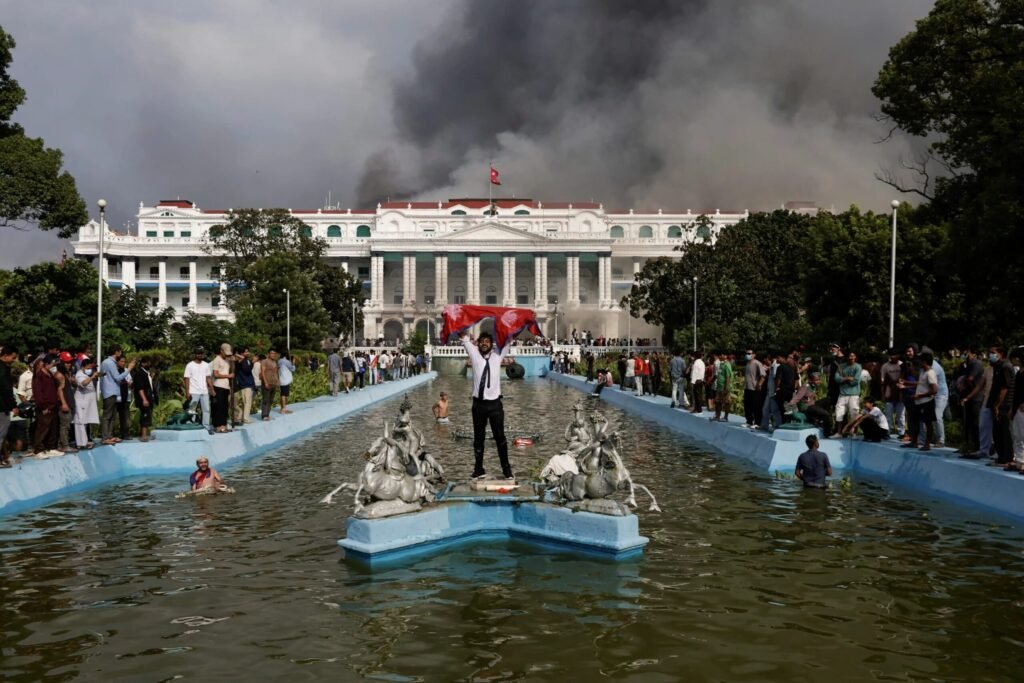
Nepal's Road to Democracy: A Century of Struggle
Nepal's journey from an absolute monarchy to a federal democratic republic is a remarkable and complex story of popular uprisings, political upheavals, and the unwavering demand of its people for sovereignty. The fall of the monarchy was not a single event but the culmination of decades of a push-and-pull between the monarchy and pro-democracy forces.
The End of Absolute Rule
For centuries, Nepal was ruled by a monarchy, with some periods seeing a hereditary prime ministerial system under the Rana dynasty that reduced the king to a figurehead. The first major step toward democracy was in 1951, when a revolution overthrew the Rana regime and established a brief period of parliamentary democracy. However, this was short-lived. In 1960, King Mahendra dissolved parliament and banned political parties, establishing the Panchayat system, a party-less political structure that concentrated power in his hands for three decades.
The true turning point came with the 1990 People's Movement (Jana Andolan I). This widespread pro-democracy movement forced King Birendra to concede and adopt a new constitution, establishing a constitutional monarchy with a multiparty democracy. While this was a significant victory, political instability, corruption, and the rise of a Maoist insurgency in 1996 plagued the new system.
The Final Chapter: From Royal Massacre to Republic
The monarchy's ultimate collapse was set in motion by a series of dramatic events. The 2001 Royal Massacre, in which Crown Prince Dipendra killed King Birendra and most of the royal family before committing suicide, plunged the nation into crisis. The king's brother, Gyanendra, ascended the throne amid public suspicion. In 2005, citing the need to quell the Maoist insurgency and restore order, King Gyanendra staged a royal coup, dissolving the parliament and assuming absolute power. This move proved to be his undoing.
The king's actions fueled a second wave of protests. The 2006 People's Movement (Jana Andolan II) saw a historic alliance between the Maoists and mainstream political parties. Mass protests and civil disobedience brought the country to a standstill, forcing the king to relinquish his power and reinstate the parliament. In 2008, the newly elected Constituent Assembly officially abolished the 240-year-old monarchy, and Nepal was declared a federal democratic republic.
Interesting Facts About the Fall of the Monarchy
- The Power of the People: The transition was largely a result of peaceful, mass civil protests that mobilized people from all walks of life, demonstrating the power of a unified populace.
- The Maoist Integration: A key and unusual aspect was the integration of the Maoist rebel party, which had been fighting a decade-long civil war, into the mainstream political process.
- Symbolic End: The last king, Gyanendra, left the royal palace and became a commoner, a symbolic end to a long history of divine-right rule.
- A History of Dictatorships: The 2008 transition marked the end of the Shah dynasty's direct rule, but the country had experienced periods of authoritarian rule under various systems before.
Nepal's transition from monarchy to democracy is a compelling case study of a nation's fight for self-governance. While the road to a stable democracy has been challenging, the end of the monarchy remains a historic triumph for its citizens.