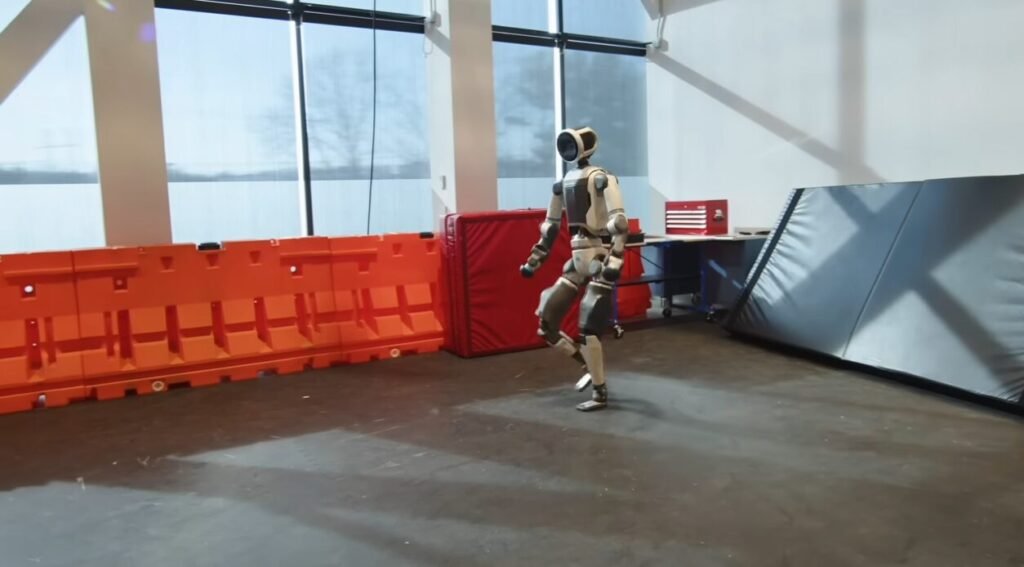
Boston Dynamics’ Atlas: The Evolution of the Hyper-Dynamic Humanoid Robot
The Atlas robot, a creation of Boston Dynamics, represents the cutting edge of humanoid robotics. While the specific designation "Atlas 3ia" is not an official version name, the technology behind the latest iterations of Atlas demonstrates a profound leap in capability, focusing on dynamic movement, dexterity, and autonomous operation. The development is shifting Atlas from a research platform to a prototype for real-world application, particularly in industrial and dangerous environments.
From Hydraulics to All-Electric Power
The most significant recent development in the Atlas program is the transition from a complex, noisy, and maintenance-intensive hydraulic system to a fully electric design.
- Enhanced Agility and Strength: This all-electric build, publicly unveiled in 2024, allows for even greater power density and more refined control. The new electric actuators reportedly deliver power that exceeds that of elite human athletes while maintaining a compact form factor.
- Streamlined Design: The latest Atlas features a more humanoid and upright design with 360-degree rotation capabilities in its hips, waist, and neck joints. This new architecture supports advanced manipulation tasks, moving far beyond the dynamic locomotion feats the robot was initially known for.
Athletic Intelligence and Whole-Body Control
Atlas’s core strength lies in its advanced control systems and sophisticated artificial intelligence, which enables it to interact with the physical world in ways previously exclusive to humans.
- Dynamic Balance: The robot utilizes complex algorithms, including Model Predictive Control (MPC), that enable it to predict its own motion and adjust its steps and balance in real-time. This allows it to navigate rough terrain, recover from unexpected pushes, and perform complex parkour-style movements like backflips and vaults.
- Integrated Manipulation: Modern research on Atlas, often in collaboration with entities like the Toyota Research Institute (TRI), focuses on whole-body manipulation. This means the control system simultaneously coordinates the robot's arms, legs, and torso. It uses its entire body to balance while performing tasks like lifting and sorting heavy, irregular objects.
- Perception and AI: Atlas leverages a suite of sensors, including RGB cameras and depth sensors, which feed into onboard computers. These systems utilize Reinforcement Learning (RL) and Large Behavior Models (LBMs), enabling the robot to autonomously plan long, continuous sequences of tasks and adapt on the fly to environmental changes, such as a box lid closing unexpectedly.
Purpose and Future Potential
Initially created to aid emergency services in search and rescue operations, such as navigating rubble and operating equipment in dangerous zones, the evolution of Atlas is pointing toward commercial industrial applications.
- Industrial Automation: With its enhanced strength and dexterity, Atlas is being primed for manufacturing and logistics roles, specifically for autonomously moving and sorting parts in factory settings where human-level dexterity and mobility are required.
- Research Platform: Fundamentally, Atlas remains a crucial research and development platform for Boston Dynamics. The data and insights gained from teaching Atlas complex, dynamic behaviors are key to advancing the entire field of general-purpose humanoid robotics. The goal is to create a highly capable, mobile robot that can operate safely and reliably in unstructured human environments.
The continuous, rapid progress in Atlas's abilities highlights its position as a technological benchmark, constantly redefining the boundaries of what a humanoid machine can achieve.