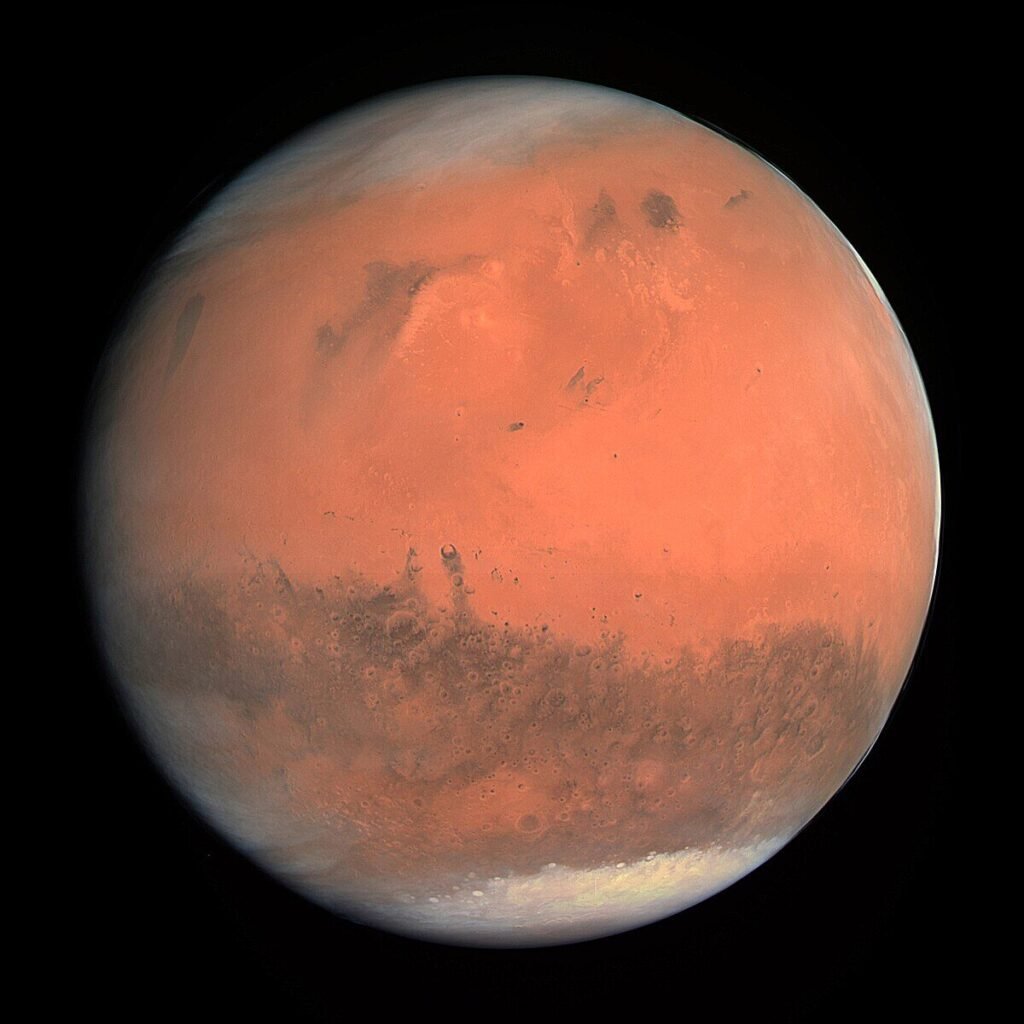
Unlocking Martian Secrets: The Hunt for Life on the Red Planet
The search for life beyond Earth has long been a pursuit of scientists and dreamers alike. While Mars has been a central focus of this quest for decades, recent discoveries have provided the most compelling evidence yet that the Red Planet may not be as lifeless as once thought. No definitive proof of life—past or present—has been found, but a series of groundbreaking findings has turned the question of Martian life from a distant hope into a very real scientific possibility.
The Building Blocks: Water and Organic Molecules
The scientific strategy for finding life on Mars has always been simple: "follow the water." Recent missions have confirmed that water, a key ingredient for life as we know it, was once abundant on Mars. Rovers have discovered ancient riverbeds, deltas, and shorelines, painting a picture of a planet that once had a warm, wet environment. While the surface today is cold and dry, evidence of frozen water at the poles and sub-surface ice remains.
Perhaps even more intriguing is the discovery of organic molecules by the Curiosity rover in Martian rock samples. Organic molecules are the fundamental building blocks of life, as they contain carbon and hydrogen. Their presence is a crucial indicator that the necessary ingredients for life were present. However, it's important to note that these molecules can also be formed through non-biological processes, so their discovery alone is not proof of life.
The Methane Mystery
One of the most perplexing and tantalizing discoveries is the presence of methane in the Martian atmosphere. On Earth, the vast majority of methane is produced by living organisms. On Mars, scientists have detected sporadic plumes of methane, but the source remains a mystery. While it could be a sign of biological activity—perhaps from a form of life living underground—it could also be generated by a purely geological process, such as the reaction of water with rock in the planet’s crust. This mystery is one of the most active areas of research, as it could be a crucial clue in the search for life.
The Next Frontier: The Search for Biosignatures
The next phase of the search is focused on finding biosignatures—physical or chemical evidence of past or present life. NASA's Perseverance rover is currently a key player in this mission. It is drilling into the Martian surface and collecting rock and soil samples from an ancient lakebed. These samples are being stored in sealed tubes, awaiting a future mission that will retrieve them and bring them back to Earth for in-depth analysis. This is the first time in history that samples from another planet are being collected with the explicit goal of answering the question of life.
While the search continues, the collective evidence from recent missions has shown that Mars was once a more habitable world than previously thought. The hope now is that within the rocks and soil of the Red Planet, a definitive answer to one of humanity's oldest questions is waiting to be found.